Diversification for Indian Investors: A Practical Guide to Building a Balanced Portfolio
Investing can help individuals work toward long-term financial goals, but every investment carries some level of risk. One commonly used approach to managing portfolio risk is diversification.
Diversification means spreading investments across different asset classes, sectors, companies, or markets rather than depending heavily on a single investment. For Indian investors, understanding diversification can help create a portfolio that is better aligned with their financial goals, time horizon, and risk tolerance.
Understanding Diversification in Investing
Diversification is an investment strategy designed to reduce the impact of poor performance from any single investment. Instead of concentrating money in one stock, sector, or asset type, investors distribute their investments across different areas.
For example, an investor may combine equities, fixed-income investments, mutual funds, and other suitable assets. If one part of the portfolio performs poorly, other investments may perform differently and help reduce the overall impact.
Why Does Diversification Matter?
The main purpose of diversification is risk management.
Different investments can respond differently to economic conditions, interest-rate changes, company performance, and market movements. Holding a variety of investments can therefore reduce dependence on the performance of one particular asset.
However, diversification does not guarantee profits or eliminate investment losses.
How Diversification Works in the Indian Market
Indian investors can diversify their portfolios in several ways.
1. Diversification Across Asset Classes
Investors can consider different types of investments based on their objectives and risk tolerance.
| Asset Class | General Characteristics | Key Consideration |
|---|---|---|
| Equities | Higher growth potential with higher volatility | Market and company-specific risk |
| Fixed Income | Generally lower volatility than equities | Interest-rate and credit risk |
| Mutual Funds | Can provide exposure to multiple securities | Depends on the fund’s strategy |
| Real Estate | May provide rental income and capital appreciation | Requires significant capital and management |
| Gold/Commodities | Can provide exposure outside traditional financial assets | Prices can fluctuate significantly |
The appropriate allocation depends on factors such as financial goals, investment horizon, and risk tolerance.
2. Diversification Across Sectors
Investors who invest in equities can also consider exposure across different industries.
Examples include:
- Information Technology
- Banking and Financial Services
- Healthcare
- Consumer Goods
- Energy
- Automobiles
- Manufacturing
- Telecommunications
Concentrating heavily in one sector can increase portfolio exposure to sector-specific risks.
3. Diversification Across Companies
Holding investments in multiple companies can reduce dependence on the performance of one business.
However, owning many companies does not automatically mean a portfolio is well diversified. If most companies operate in the same sector or are affected by the same economic factors, the portfolio may still have significant concentration risk.
Benefits of Portfolio Diversification
Reducing Concentration Risk
If a portfolio depends heavily on one company, sector, or asset class, poor performance in that area can have a large impact.
Diversification spreads this exposure across multiple investments.
Managing Portfolio Volatility
Different asset classes and investments may not move in exactly the same way at the same time. Combining them can help manage overall portfolio fluctuations.
Supporting Long-Term Investment Planning
Diversification can be incorporated into a long-term investment strategy based on financial goals, time horizon, and risk tolerance.
Avoiding Dependence on a Single Investment
A diversified portfolio does not rely entirely on one stock, company, sector, or market to achieve its objectives.
Common Misconceptions About Diversification
Diversification Means Buying as Many Stocks as Possible
Not necessarily.
Buying a large number of investments without considering their underlying exposure can create a complicated portfolio without meaningfully improving diversification.
The objective is to spread risk thoughtfully rather than simply increase the number of holdings.
Diversification Eliminates Risk
Diversification cannot eliminate all investment risk.
Market-wide declines can affect multiple asset classes at the same time. Diversification is better understood as a risk-management approach, not a guarantee against losses.
More Investments Always Mean Better Diversification
More investments do not automatically produce a better portfolio.
Investors should consider how their investments are related and whether they provide meaningful diversification.
How Beginners Can Start Building a Diversified Portfolio
Beginners should first understand their:
- Financial goals
- Investment time horizon
- Risk tolerance
- Available investment capital
- Liquidity requirements
Rather than selecting investments simply because they are popular, investors should understand what each investment contributes to the overall portfolio.
Mutual Funds and Diversification
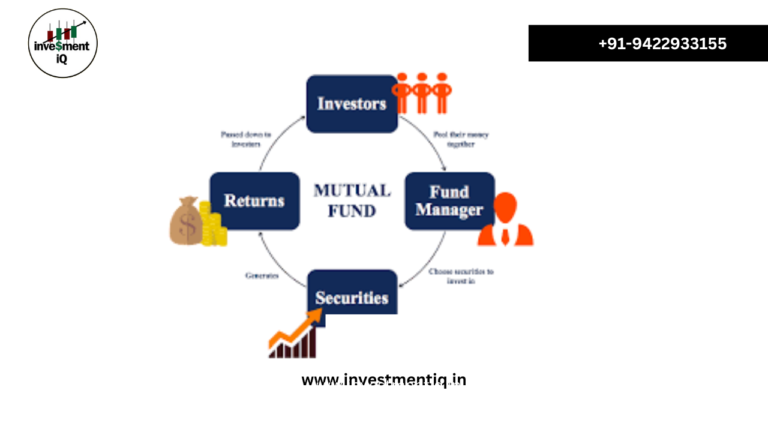
Mutual funds can provide exposure to multiple securities through a single investment vehicle. Depending on the type of fund, investors may gain exposure to different companies, sectors, or asset classes.
Investors should still review the fund’s investment strategy, costs, risks, and portfolio composition before investing.
Individual Stocks
Investors choosing individual stocks should understand the businesses they are investing in and avoid allowing one company or sector to dominate the portfolio unintentionally.
Fixed-Income Investments
Fixed-income investments can play a role in diversification for investors who want exposure beyond equities. Their suitability depends on factors such as credit quality, maturity, interest rates, and the investor’s objectives.
Diversification and Risk Management
Diversification should be considered as one component of a broader risk-management strategy.
Investors can also consider:
- Maintaining an emergency fund
- Matching investments with financial goals
- Maintaining an appropriate investment horizon
- Reviewing portfolio concentration
- Understanding investment costs
- Considering tax implications
- Rebalancing when appropriate
- Avoiding decisions based solely on short-term market movements
A diversified portfolio should reflect the investor’s circumstances rather than follow a single formula that works for everyone.
Rebalancing a Diversified Portfolio
Portfolio allocations can change over time because different investments may grow at different rates.
For example, if equities increase significantly while other assets remain relatively stable, equities may represent a larger percentage of the portfolio than originally intended.
Rebalancing involves reviewing the portfolio and adjusting allocations when appropriate to bring the portfolio closer to its intended structure.
The frequency of review depends on the investor’s strategy and circumstances. There is no universal requirement that every investor should rebalance at a specific interval.
Managing Costs and Taxes
Diversification can involve multiple investments, and investors should consider the costs associated with buying, selling, managing, or holding them.
Potential costs may include:
- Brokerage charges
- Fund expenses
- Transaction costs
- Taxes
- Account-related charges
Tax treatment can also vary depending on the investment type, holding period, and applicable rules.
Investors should check current tax rules and consider professional advice where appropriate.
Avoiding FOMO and Emotional Investing
Market trends can create pressure to invest in assets that are receiving significant attention.
This can lead investors to make decisions based on short-term movements rather than their financial plan.
A clearly defined investment strategy can help investors remain focused on:
- Long-term objectives
- Risk tolerance
- Asset allocation
- Diversification
- Investment discipline
Diversification is not a strategy for predicting which investment will perform best. Instead, it helps investors avoid relying entirely on a single outcome.
Choosing Investment Platforms and Research Tools
Technology has made investing and portfolio tracking more accessible to Indian investors.
Depending on their needs, investors may use:
| Investor Need | Possible Resource |
|---|---|
| Mutual fund investing | Mutual fund platforms |
| Stock investing | SEBI-registered brokers |
| Market research | NSE/BSE resources and research platforms |
| Portfolio tracking | Broker and financial-management tools |
| Investment education | Financial education platforms and courses |
Investors should evaluate costs, features, security, regulatory status, and available investment products before choosing a platform.
The Role of Financial Education
Understanding diversification requires more than simply knowing the definition.
Investors can improve their knowledge by learning about:
- Asset allocation
- Risk and return
- Equity markets
- Mutual funds
- Fixed-income investments
- Portfolio management
- Investment costs
- Tax considerations
- Financial planning
Courses, books, educational websites, and professional financial advisors can all be potential sources of learning.
Frequently Asked Questions
1. What is diversification in investing?
Diversification is the practice of spreading investments across different assets, sectors, companies, or markets to reduce concentration risk.
2. Is diversification suitable for beginners?
Diversification can be useful for beginners because it provides a way to spread exposure rather than depending entirely on one investment. Beginners should first understand their financial goals and risk tolerance.
3. Does diversification guarantee profits?
No. Diversification does not guarantee profits or prevent losses. It is primarily a method of managing concentration and portfolio risk.
4. How can Indian investors diversify their portfolios?
Investors can consider diversification across asset classes, sectors, companies, and other suitable investments depending on their goals, risk tolerance, and investment horizon.
5. How many stocks are needed for a diversified portfolio?
There is no universal number. Simply increasing the number of stocks does not guarantee meaningful diversification. Investors should also consider sector exposure, company exposure, and correlations between investments.
6. Should beginners invest only in stocks?
Not necessarily. The appropriate portfolio depends on an individual’s financial goals, time horizon, risk tolerance, and circumstances. Different asset classes can serve different purposes.
7. How often should I review my portfolio?
Portfolio reviews should be based on the investor’s strategy and circumstances. Investors can review whether their asset allocation, risk level, and financial goals remain aligned and rebalance when appropriate.
Conclusion
Diversification is an important concept for Indian investors who want to manage concentration risk and build a structured investment portfolio.
Rather than relying heavily on one stock, sector, or asset class, investors can consider spreading their investments according to their financial goals, risk tolerance, and investment horizon.
Diversification does not remove investment risk, but it can help reduce the impact of relying too heavily on any single investment. Combined with sound financial planning, cost awareness, regular portfolio reviews, and ongoing financial education, diversification can become an important part of a disciplined investment approach.