Read more about the article IMPORTANCE OF TECHNICAL ANALYSIS
"Understanding candlestick patterns is crucial for identifying market trends and making informed trading decisions."

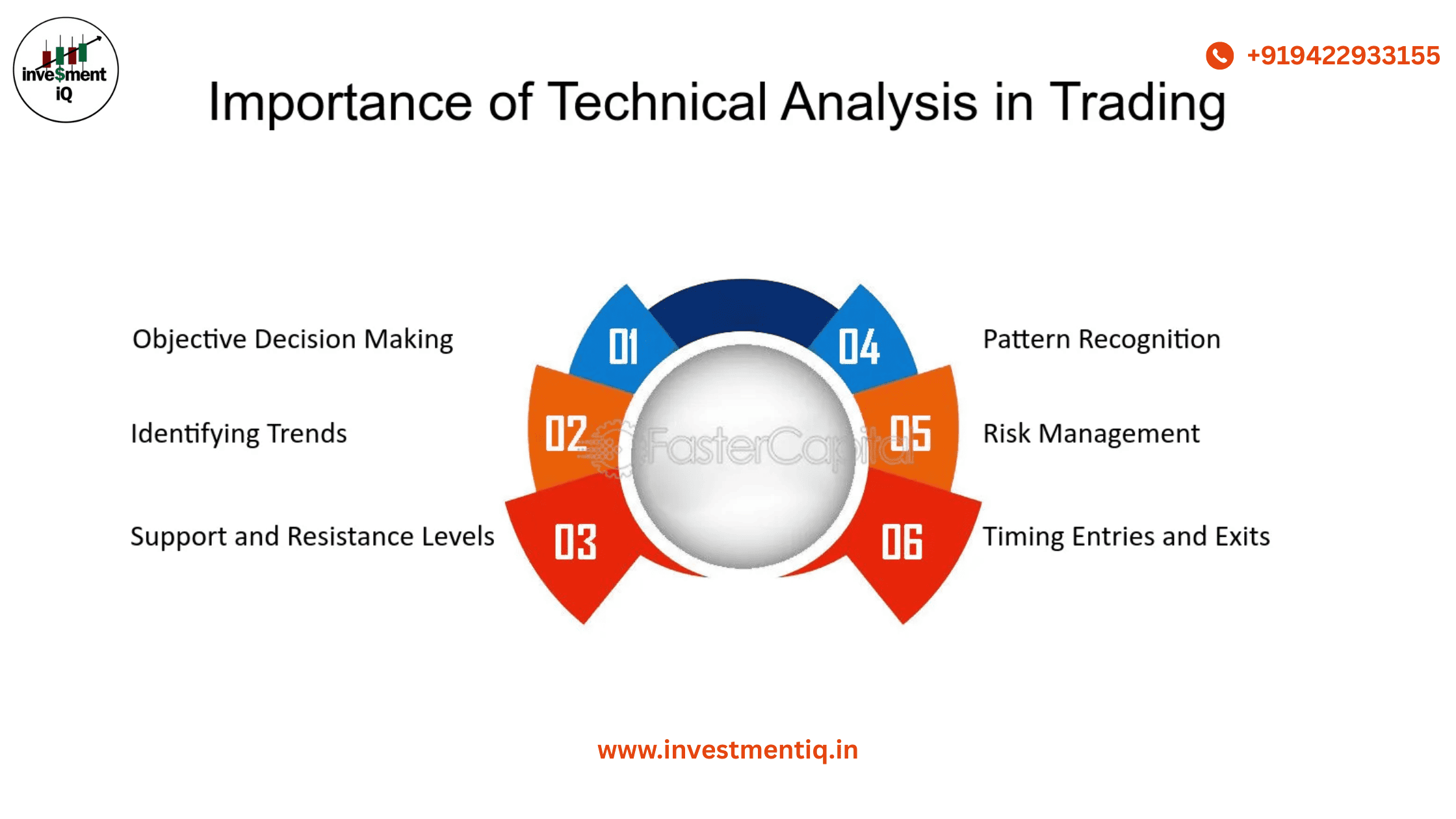
IMPORTANCE OF TECHNICAL ANALYSIS

IMPORTANCE OF TECHNICAL ANALYSIS  1. Integration with Other Analysis: We can use technical analysis in addition to fundamental analysis. To refine our entries in fundamentally strong stocks. Example: An investor may…

Continue ReadingIMPORTANCE OF TECHNICAL ANALYSIS
Read more about the article Volatility Indices
"Volatility Indices, such as the VIX, reflect expected market fluctuations and help traders manage risk."

Volatility Indices

Volatility Indices Indicators of implied volatility designed to measure fear and complacency for a range of indices and ETFs. What Are Volatility Indices? The volatility indices measure the implied volatility…

Continue ReadingVolatility Indices
Read more about the article What Does a Technical Indicator Offer?
"Technical indicators help traders analyze price trends, volume, and market momentum."

What Does a Technical Indicator Offer?

A technical indicator provides an alternative viewpoint for examining the price movement. Some, like moving averages, have comparatively simple physics and are derived from basic mathematics. Others, like stochastics, have intricate formulas that take more research to completely comprehend and value. Technical indicators can offer a distinct viewpoint on the direction and strength of the underlying price action, regardless of how complicated the  calculation is. An indicator known as a simple moving average determines the average price of a securities over a predetermined number of time periods. The data will be smoothed by a moving average if a security is very volatile. By eliminating random noise, a moving average provides a more consistent view of the price activity. Given how volatile Veritas (VRTSE) is, an analyst might find it challenging to identify a trend. Random fluctuations are smoothed down to make it simpler to spot a trend by applying a 10-day simple moving average to the price movement. Why Use Indicators? Indicators serve three broad functions: to alert, to confirm and to predict. An indicator can act as…


Continue ReadingWhat Does a Technical Indicator Offer?
Read more about the article Advance-Decline Volume Percent
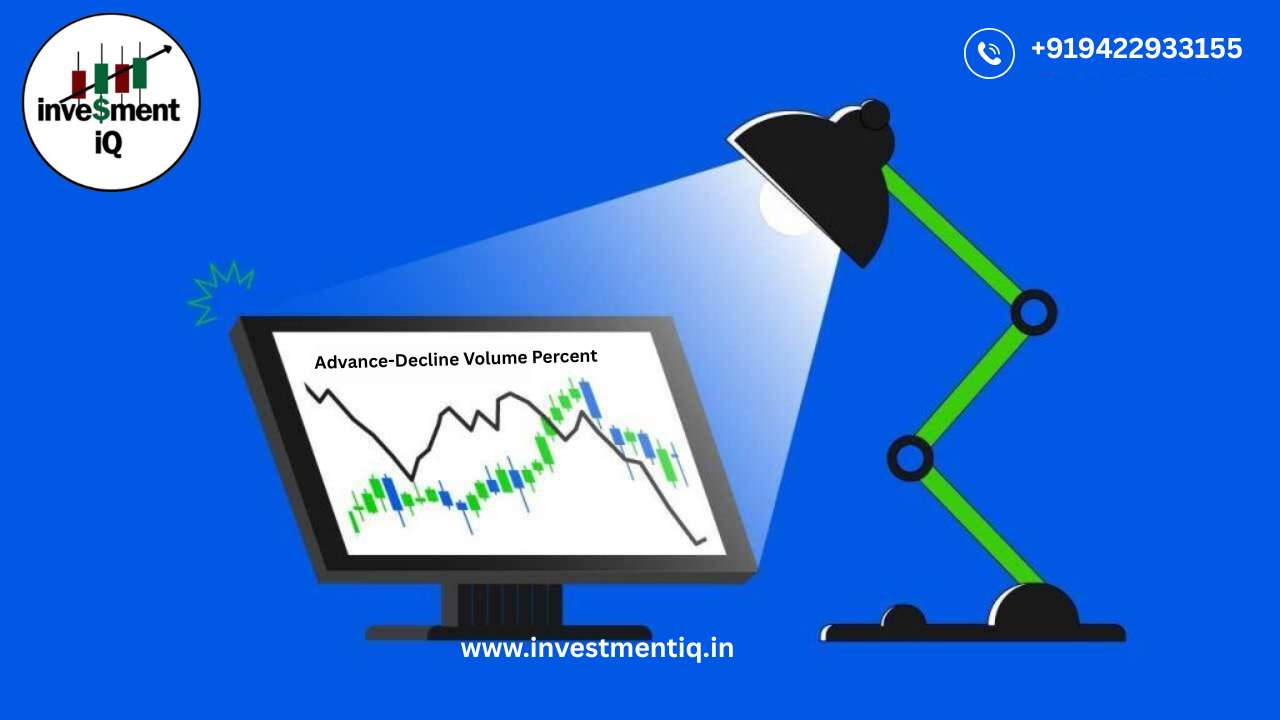
📊 Want to know if market volume is truly behind the move? The Advance-Decline Volume Percent tells you how much buying or selling power is driving the trend. ✔️ A must-use indicator for serious technical traders.

Advance-Decline Volume Percent

Advance-Decline Volume Percent A breadth indicator that measures the percentage of net advancing within a particular group, such as a SPDR or index ETF. you want to learn more about…

Continue ReadingAdvance-Decline Volume Percent
Read more about the article Aroon Indicators
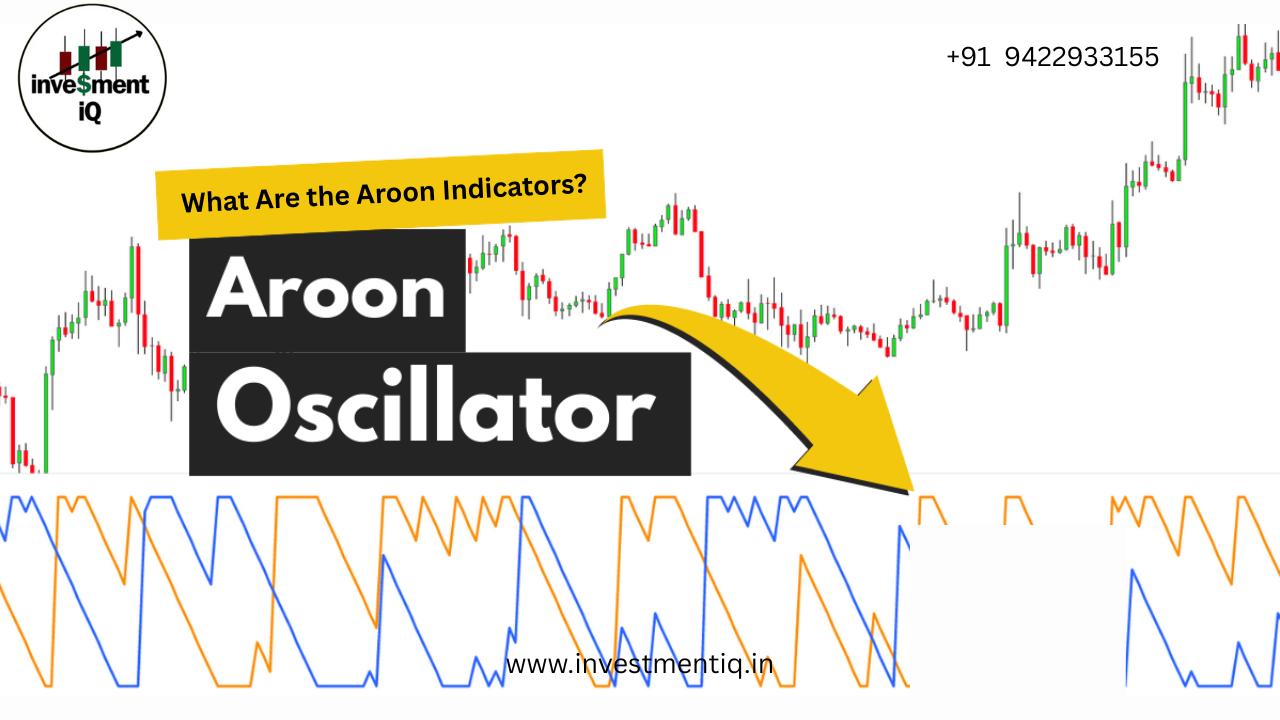
Aroon Indicators help traders identify the beginning of new trends and the strength of existing ones.

Aroon Indicators

What Are the Aroon Indicators? Developed by Tushar Chande in 1995, Aroon is an indicator system that determines whether a stock is trending or not and how strong the trend…

Continue ReadingAroon Indicators
Read more about the article Advance-Decline Line
📉 Is the market rally really strong — or just driven by a few stocks? The Advance-Decline Line (A/D Line) reveals the truth behind the trend! 🔍 Learn how this powerful indicator uncovers market strength or weakness.

Advance-Decline Line

Advance-Decline Line The Advance-Decline Line (AD Line) is a breadth indicator based on Net Advances. What Is the Advance-Decline Line? The Advance-Decline Line (AD Line) is a breadth indicator based…

Continue ReadingAdvance-Decline Line
Read more about the article Record High Percent
"The Record High Percent measures the percentage of stocks reaching new highs, offering insight into market momentum."

Record High Percent

What Is the Record High Percent? A breadth measure based on new highs and lows is the Record High Percent.The quantity of equities setting new 52week highs is known as new  highs.The quantity of equities that set new 52week lows is known as new lows.The number of new highs divided by the number of new highs plus  new lows yields the indicator.New highs in relation to the total (new highs plus new lows) are displayed by this ratio.Record High Percent is a gauge of anindex's underlying strength or weakness, much like all other breadth indicators.For a number of important indexes, StockCharts.com computes  the  Record High Percent. Calculating the Record High Percent {New Highs / (New Highs + New Lows)} x 100 Spreadsheet 1 The number of new highs in relation to the total (new highs + new lows) is displayed by the Record High Percent, as the formula suggests. To generate round values that range from 0 to 100, the sum is multiplied by 100.…

Continue ReadingRecord High Percent