What Is the Accumulation Distribution Line?
Marc Chaikin created the Accumulation Distribution Line, a volumebased indicator that gauges the total amount of money coming into and going out of an asset.
The indicator was first dubbed the Cumulative Money Flow Line by Chaikin.The Accumulation Distribution Line is a running total of the Money Flow Volume for each period, just like cumulative indicators.
- First, a multiplier is calculated based on the relationship of the close to the high-low range.
- Second, the Money Flow Multiplier is multiplied by the period’s volume to come up with a Money Flow Volume.
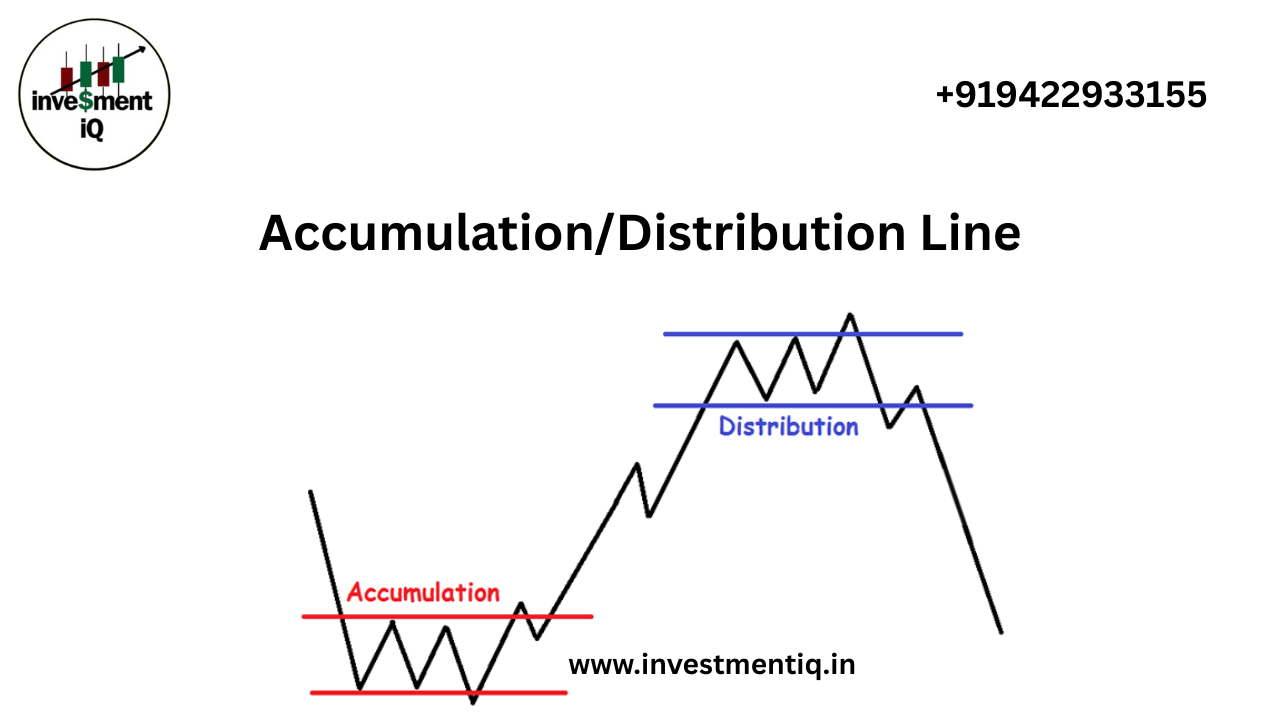
In the Accumulation Distribution Line, the Money Flow Volume is a running total.When the indicator deviates from the security price, chartists can use it to predict reversals or to confirm the underlying trend of a securities.
How Do You Calculate the Accumulation Distribution Line?
The Accumulation Distribution Line (ADL) can be calculated in three steps.Determine the Money Flow Multiplier first.The Money Flow Volume can then be calculated by multiplying this amount by the volume.Third, construct the Accumulation Distribution Line (ADL) by calculating the running sum of Money Flow Volume.A copy
  1. Money Flow Multiplier = [(Close  -  Low) - (High - Close)] /(High - Low)

  2. Money Flow Volume = Money Flow Multiplier x Volume for the Period

  3. ADL = Previous ADL + Current Period's Money Flow Volume
The range of the Money Flow Multiplier is +1 to -1. It is hence the key to the Accumulation Distribution Line and the Money Flow Volume. When the close is in the upper half of the high-low range, the multiplier is positive; when it is in the lower half, it is negative. This makes sense since when prices close in the higher half of the period’s range, buying pressure is stronger than selling pressure (and vice versa). When the multiplier is positive, the Accumulation Distribution Line rises; when it is negative, it falls.

Chart 1 – Accumulation Distribution Line
The multiplier adjusts the amount of volume that ends up in the Money Flow Volume. Volume is, in effect, reduced unless the Money Flow Multiplier is at its extremes (+1 or -1). The multiplier is +1 when the close is on the high and -1 when the close is on the low. All volume is positive when +1 and all volume is negative when -1. At 0.50, only half of the volume translates into the period’s Money Flow Volume.
The table below displays the Money Flow Multipliers, Money Flow Volume, and Accumulation Distribution Line for a stock. Notice how the multiplier is between 0.50 and 1 when the close is strong and between -0.50 and -1 when the close is weak.

Table 1 – Accumulation Distribution Line
LEARN MOEW ABOUT THIS JUAT CLICK HERE Technical Indicators & Overlays
What Does the Accumulation Distribution Line Tell You?
The Accumulation Distribution Line is a cumulative measure of each period’s volume flow, or money flow. A high positive multiplier combined with high volume shows strong buying pressure that pushes the indicator higher. Conversely, a low negative number combined with high volume reflects strong selling pressure that pushes the indicator lower. Money Flow Volume accumulates to form a line that either confirms or contradicts the underlying price trend. In this regard, the indicator is used to either reinforce the underlying trend or cast doubts on its sustainability. An uptrend in prices with a downtrend in the A negative reversal on the price chart may be predicted by the Accumulation Distribution Line, which indicates underlying selling pressure (distribution). A price decline along with an increase in the Accumulation Distribution Line suggests underlying accumulation, or buying pressure, which may portend a bullish price turnaround.
What is the Contrast Between Favored Stock and Normal Stock?
Day Trading Guide for August 7, 2024: Intraday supports, resistances for Nifty50 stocks