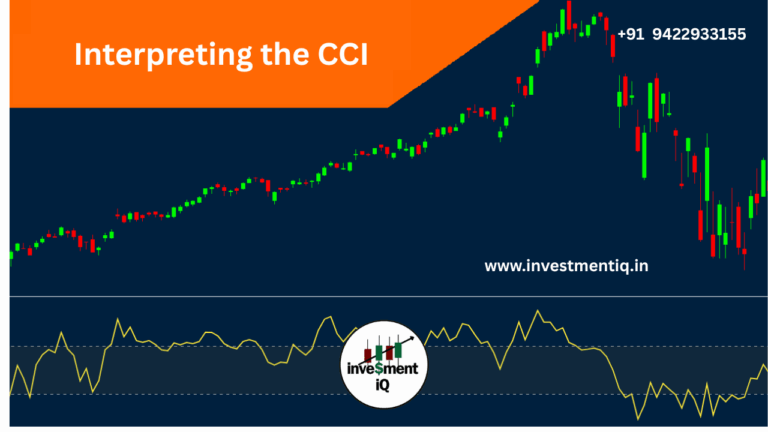

Introduction: The Pulse of Market Momentum
Imagine you’re driving a car. The speedometer tells you how fast you’re going — whether you’re accelerating or slowing down.
In trading, the Rate of Change (ROC) indicator works much like that speedometer. It measures how fast prices are changing over a given period. Instead of focusing on where prices are, ROC shows how quickly they’re moving.
If you’re new to technical analysis, learning how to use the ROC indicator can help you understand market momentum, trend reversals, and entry or exit timing — essential skills for any trader or investor aiming to make informed decisions.
Let’s dive into the world of ROC, decode its working, and see how you can apply it confidently in your trading strategy.
1. What Is the Rate of Change (ROC) Indicator?
The Rate of Change (ROC) is a momentum-based technical indicator that measures the percentage change in price between the current price and a price from a specified number of periods ago.
In simple terms, ROC answers the question:
“How fast is the price moving compared to where it was a few days, weeks, or months ago?”
It’s a powerful yet straightforward way to measure price momentum — whether buyers or sellers are in control.
Formula:
[
ROC = \frac{(Current Price – Price , n , periods , ago)}{Price , n , periods , ago} \times 100
]
Where:
- n = number of periods (days, weeks, or months)
- Current Price = today’s closing price
- Price n periods ago = closing price from n periods earlier
Example:
If a stock’s price was ₹100 ten days ago and is ₹110 today,
[
ROC = \frac{(110 – 100)}{100} \times 100 = 10%
]
That means the price increased by 10% over the last 10 days.
2. How to Interpret ROC Values
The ROC indicator typically oscillates above and below a zero line, showing whether momentum is bullish or bearish.
Here’s how to read it:
- ROC > 0 (Positive Value):
Prices are rising compared to the past. The higher the value, the stronger the upward momentum. - ROC < 0 (Negative Value):
Prices are falling compared to the past. The lower the value, the stronger the downward momentum. - ROC = 0:
No change the price is the same as it was n periods ago.
Essentially, the ROC line tells you how strong or weak the current trend is and helps you identify potential turning points in the market.
3. ROC in Action: Understanding Momentum
Let’s visualize the concept with an example:
- If ROC moves sharply upward, it means buyers are accelerating, pushing prices higher.
- If ROC moves downward, it means sellers are gaining control.
- When ROC moves sideways near zero, it indicates consolidation or range-bound movement.
In other words, ROC shows when the market’s “engine” is speeding up or slowing down.
4. How to Use ROC in Trading
The ROC indicator can be applied in several practical ways depending on your trading style whether you’re a short-term trader or a long-term investor.
A. Identifying Trend Direction
- When ROC is above zero and rising → bullish momentum (consider long positions).
- When ROC is below zero and falling → bearish momentum (consider short positions).
This helps traders confirm whether to ride the existing trend or wait for a reversal.
B. Spotting Overbought and Oversold Conditions
Like RSI or Stochastic Oscillator, the ROC can also signal when the market is overbought (too high) or oversold (too low).
- Overbought: ROC is extremely high → prices may be due for a correction.
- Oversold: ROC is extremely low → prices may be ready to rebound.
⚠️ Note: ROC doesn’t have fixed overbought or oversold levels (like RSI’s 70/30). You must compare current ROC values to historical extremes on that specific stock or index.
C. Detecting Divergences
Divergences between price and ROC are strong reversal signals:
- Bullish Divergence:
Price makes lower lows, but ROC makes higher lows → possible upward reversal ahead. - Bearish Divergence:
Price makes higher highs, but ROC makes lower highs → possible downward reversal ahead.
These are often early signs of trend exhaustion before a reversal.
D. Confirming Breakouts
If ROC moves strongly above zero during a breakout, it confirms strength behind the move.
If it fails to rise despite a price breakout, it signals weak momentum — a potential false breakout.
5. Choosing the Right ROC Period
The number of periods (n) you use determines the sensitivity of the indicator.
- Short-term traders (e.g., 9 or 12 periods):
ROC reacts quickly but may produce more false signals. - Long-term investors (e.g., 25 or 50 periods):
ROC reacts slower but provides more stable trend signals.
💡 Pro Tip:
Combine both short-term and long-term ROC settings to view both momentum swings and broader trends.
6. Advantages of Using ROC Indicator
The ROC is simple yet powerful. Here’s why traders and analysts rely on it:
✅ Measures momentum clearly:
It visually shows how fast the price is moving.
✅ Identifies early reversals:
Divergences help catch turning points before they’re obvious.
✅ Versatile across assets:
Works for stocks, forex, crypto, and commodities.
✅ Complements other indicators:
Enhances moving averages, MACD, or RSI setups by confirming momentum strength.
✅ Ideal for all timeframes:
Useful for intraday, swing, and long-term analysis.
7. Limitations of the ROC Indicator
Like any technical tool, ROC isn’t perfect. Knowing its limitations helps avoid costly mistakes.
⚠️ False Signals in Choppy Markets:
ROC can fluctuate rapidly in sideways markets, leading to wrong entries.
⚠️ Lagging Indicator:
Although it measures momentum, it still uses past prices, which can delay signals.
⚠️ No Standard Overbought/Oversold Levels:
Interpretation depends on historical analysis — not fixed numbers.
⚠️ Sensitive to Period Selection:
Shorter periods cause noise; longer ones may miss short-term opportunities.
💬 Tip: Always use ROC with trend confirmation tools (like moving averages or support/resistance analysis) to reduce false signals.
8. Combining ROC with Other Indicators
Professional traders rarely use indicators in isolation.
Here’s how you can pair ROC effectively:
- ROC + Moving Average:
Use ROC to confirm the momentum of moving average crossovers. - ROC + RSI:
RSI shows overbought/oversold zones, while ROC confirms speed of movement. - ROC + MACD:
Both measure momentum but in slightly different ways — combining them enhances accuracy. - ROC + Price Action:
Combine ROC signals with candlestick patterns (like engulfing or hammer) for confirmation.
This multi-layered approach helps you trade with confidence, not guesswork.
9. Real-World Example: Applying ROC in a Stock Chart
Let’s consider Stock XYZ:
- Price 20 days ago: ₹100
- Current Price: ₹120
[
ROC = \frac{(120 – 100)}{100} \times 100 = 20%
]
So, the ROC is +20 indicating strong bullish momentum.
If the ROC later declines while prices still rise, it means momentum is slowing, and a reversal might be near.
Professional traders watch this momentum divergence closely it often signals when to book profits or tighten stop-losses.
10. Practical Tips for Using ROC Successfully
- Don’t rely on ROC alone:
Combine it with trend or volume analysis for reliable signals. - Use historical reference:
Compare today’s ROC values with past peaks and troughs to identify overbought/oversold levels. - Stay consistent:
Use the same ROC period across assets to build familiarity. - Avoid trading flat markets:
ROC works best in trending conditions. - Watch for divergences:
They often precede major market moves — train your eye to spot them.
11. The Psychology Behind ROC
The ROC indicator doesn’t just measure numbers it measures market behavior.
When momentum rises, it means more traders are joining the trend with confidence.
When it slows, it shows hesitation fewer buyers or sellers are pushing prices.
By understanding ROC, you’re not just reading a line on a chart; you’re reading the emotions and reactions of market participants.
This understanding separates successful investors from impulsive ones.
12. ROC in Different Market Conditions
| Market Type | ROC Behavior | Trading Insight |
| Uptrend | ROC stays above zero | Confirm long positions |
| Downtrend | ROC stays below zero | Confirm short positions |
| Sideways Market | ROC hovers around zero | Avoid new trades |
| Volatile Market | ROC fluctuates wildly | Use wider stop-losses |
Understanding context helps you interpret ROC correctly rather than mechanically.
13. ROC vs Other Momentum Indicators
| Indicator | Core Focus | Key Difference |
| ROC | Percentage rate of price change | Simple and direct |
| RSI | Measures speed & change of movements | Uses fixed scale (0–100) |
| MACD | Measures difference between moving averages | Better for trend strength |
| Momentum | Similar to ROC without percentage basis | ROC adds normalization |
ROC is often preferred for its simplicity and adaptability across various trading systems.
14. Final Thoughts: Why ROC Matters for Every Trader
In trading, timing is everything.
The Rate of Change (ROC) indicator helps you see not just where prices are but how fast they’re moving there.
It gives you the momentum insight that can turn confusion into clarity whether you’re deciding to enter a trade, hold a position, or exit safely.
When used with discipline and supporting indicators, ROC becomes your momentum compass guiding you through volatility with confidence.
So, start adding the ROC to your charts today. Experiment, backtest, and observe how it reacts in real market conditions. The more you understand momentum, the closer you get to mastering market timing.
👉 Ready to deepen your trading knowledge?
Visit InvestmentIQ.in and explore our courses on technical analysis, trading psychology, and smart investing. Take the next step toward becoming a confident trader.
you may be interested in ths blog here:-
What’s the difference between Treasury bonds, notes, and bills
Can I Open a Brokerage Account for My Child
What is the Contrast Between Favored Stock and Normal Stock?