
Read more about the article “How to Calculate ATR in-2025?
"Learn how to calculate ATR (Average True Range) with a clear step-by-step explanation – by InvestmentIQ.in"

“How to Calculate ATR in-2025?

"How to Calculate ATR? The Average True Range (ATR) can be computed intraday, daily, weekly, or monthly and is typically based on 14 periods. The ATR in this case will be calculated using daily data. The initial 14-day ATR is the average of the daily TR values over the previous 14 days, and the first TR value is just the High minus the Low because there must be a beginning. Then, using the ATR value from the prior period, Wilder attempted to smooth the data.A copy Current ATR = [(Prior ATR x 13) + Current TR] / 14 - Multiply the previous 14-day ATR by 13. - Add…

Continue Reading“How to Calculate ATR in-2025?
Read more about the article Average True Range (ATR) and Average True Range Percent (ATRP) in-2025
"Visual representation of Average True Range (ATR) and ATR Percent (ATRP) – tools for measuring market volatility on InvestmentIQ.in"

Average True Range (ATR) and Average True Range Percent (ATRP) in-2025

What Is the Average True Range (ATR)? The Average True Range (ATR) is a volatility indicator that was created by J. Welles Wilder. Wilder created ATR with commodities and daily prices in mind, as he did with the most of his indicators. Compared to equities, commodities are sometimes more volatile. They frequently experience gaps and limit moves, which happen when a commodity opens up or closes below the session's maximum permitted  change. The volatility of gap or limit moves would not be captured by a volatility model that solely relies on the high-low range. In order to account for this "missing" volatility, Wilder developed the Average True Range. It is important to remember that ATR doesn't indicate price direction, just volatility.In his 1978 book, New Concepts in Technical Trading Systems, Wilder discusses ATR. The Directional Movement Concept (ADX), RSI, and Parabolic SAR are also included in this book. Wilder's indications have endured and are still widely used even though they were created before the computer era. True…

Continue ReadingAverage True Range (ATR) and Average True Range Percent (ATRP) in-2025
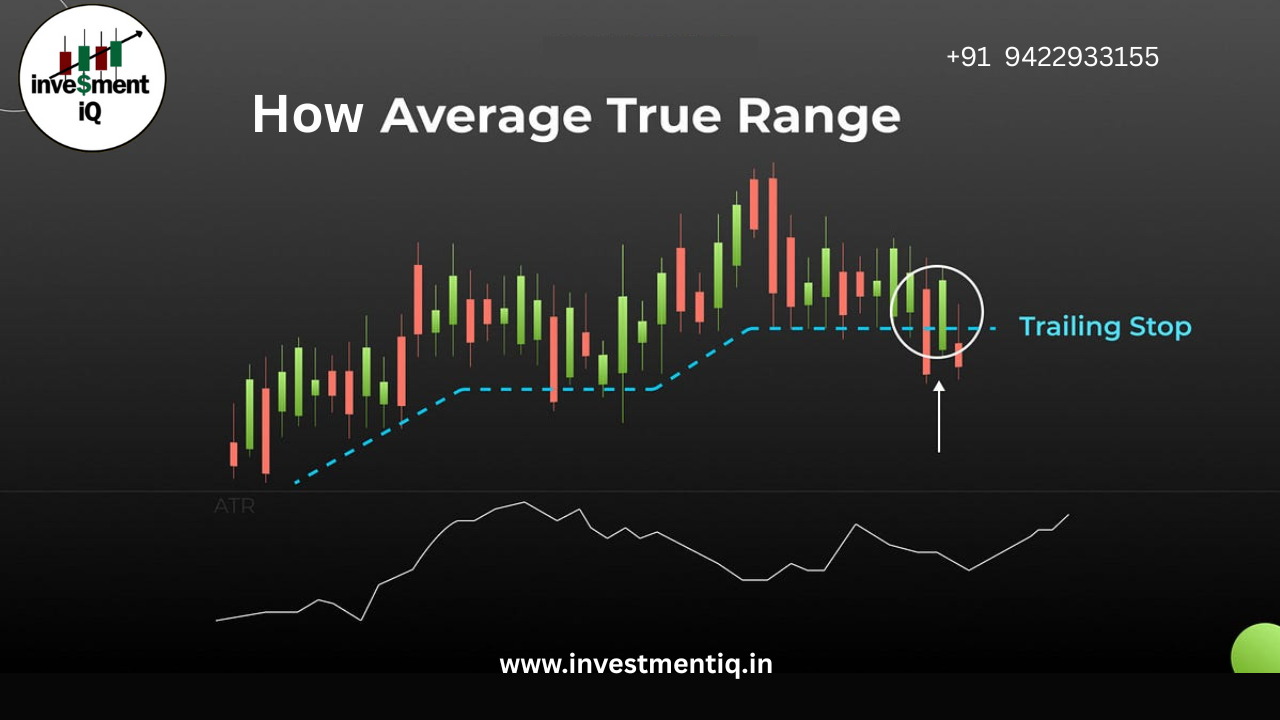
Read more about the article ATR Trailing Stops
ATR Trailing Stops provide dynamic, volatility-based exit levels to help traders lock in profits and reduce risk.

ATR Trailing Stops

What is the ATR Trailing Stops Indicator? An indicator based on volatility, the ATR (Average True Range) Trailing Stop establishes dynamic stop-loss levels for market entry or exits. This indicator establishes the trailing stops by utilizing the Average True Range, a statistic that assesses market volatility. By dynamically modifying the stop levels in response to shifting market conditions, the indicator can assist you in risk management or in determining when to enter the market. How are the ATR Trailing Stops Calculated? ATR Trailing Stops calculation requires a few steps. They are as follows: Calculate…

Continue ReadingATR Trailing Stops