
Stocks vs. Mutual Funds in India (2026): Key Differences, Risks, Returns & Which Is Better?
Choosing between stocks and mutual funds is one of the first important decisions every new investor faces. Both investment options offer opportunities to participate in financial markets and build long-term wealth. However, they work differently, involve different levels of risk, and require different approaches.
If you are a beginner in the Indian stock market, you might wonder whether you should purchase individual company shares or invest in mutual funds managed by professional fund managers.
The answer depends on your financial goals, investment knowledge, risk tolerance, available capital, and the amount of time you can dedicate to managing your investments.
In this guide, we will explore stocks vs. mutual funds, their differences, advantages, disadvantages, minimum investment considerations, taxation, and practical strategies to help you make informed investment decisions in 2026.
1. Understanding the Basics of Stocks and Mutual Funds
Before deciding where to invest, it is important to understand how stocks and mutual funds work.
Although both allow investors to participate in financial markets, their investment structures are different.
What Are Stocks?
Stocks represent ownership in a publicly listed company. When you purchase shares of a company, you become one of its shareholders.
For example, if you purchase shares of a listed Indian company, you own a small portion of that business.
Your investment value can increase or decrease depending on several factors, including:
- Company financial performance.
- Revenue and profit growth.
- Industry developments.
- Economic conditions.
- Market demand and supply.
- Investor sentiment.
Some companies also distribute dividends to shareholders. Additionally, equity shareholders may receive voting rights depending on the type of shares they own.
Example: Suppose you purchase 10 shares of a company at ₹500 per share. Your total investment is ₹5,000. If the share price increases to ₹600, your investment becomes ₹6,000, representing an unrealised gain of ₹1,000, excluding charges and taxes.
However, if the share price falls to ₹400, your investment value decreases to ₹4,000.
This is why researching a company before purchasing its shares is important.
What Are Mutual Funds?
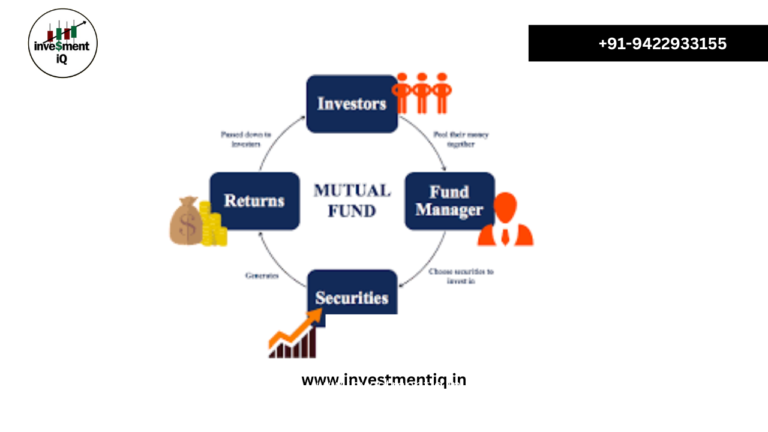
A mutual fund is an investment vehicle that collects money from multiple investors and invests it in a portfolio of assets.
These assets may include:
- Company shares.
- Government securities.
- Corporate bonds.
- Money market instruments.
- Other permitted financial instruments.
A professional fund manager manages the portfolio according to the fund’s investment objective and strategy.
Investors purchase mutual fund units rather than directly purchasing every security held by the fund.
Mutual funds are available in different categories, including:
- Equity Mutual Funds
- Debt Mutual Funds
- Hybrid Mutual Funds
- Index Funds
- Sectoral and Thematic Funds
- Liquid Funds
Example: Instead of researching and purchasing shares of 10 different companies individually, an investor can invest in an equity mutual fund that holds a diversified portfolio of companies.
This provides exposure to multiple investments through a single fund, although the level of diversification depends on the particular scheme.
How Do Stocks and Mutual Funds Work Differently?
| Feature | Stocks | Mutual Funds |
|---|---|---|
| Ownership | Direct ownership in a company | Ownership of fund units |
| Management | Investor makes decisions | Managed according to fund strategy |
| Diversification | Requires individual investment choices | Usually provides portfolio diversification |
| Research | Company-level research | Fund and portfolio research |
| Risk | Depends on the individual company and portfolio | Depends on the fund category and holdings |
| Time commitment | Can require regular monitoring | Depends on the investment strategy |
| Returns | Depend on share price and dividends | Depend on portfolio performance and expenses |
2. Eligibility, Minimum Investment and Suitability for Beginners
One of the most common questions among new investors is how much money is required to start investing.
The good news is that you do not necessarily need a large amount of capital to begin.
However, the investment process and minimum requirements differ between stocks and mutual funds.
Minimum Investment for Stocks
When purchasing individual stocks, the minimum amount generally depends on the market price of the share and the number of shares you want to purchase.
For example:
- Share price: ₹100
- Quantity: 10 shares
- Total investment: ₹1,000
You may also need a trading and demat account with a registered stockbroker.
Before selecting a broker, consider:
- Brokerage charges.
- Account maintenance fees.
- Transaction charges.
- Platform usability.
- Customer support.
- Available research and analytical tools.
Remember that a lower share price does not automatically mean a company is undervalued or a good investment.
Minimum Investment for Mutual Funds
Mutual funds generally allow investors to begin with relatively small amounts.
Depending on the scheme and investment method, some funds allow investments through Systematic Investment Plans (SIPs) or lump-sum contributions.
What is an SIP?
A Systematic Investment Plan allows you to invest a fixed amount at regular intervals, such as monthly.
For example, you could invest ₹1,000 every month in a mutual fund scheme, subject to its minimum investment requirements.
SIPs can help develop investment discipline and spread investments across different market levels. However, they do not guarantee profits or eliminate market risk.
Which Option Is Suitable for Beginners?
Both stocks and mutual funds can be considered by beginners, but the learning requirements differ.
Stocks may suit investors who:
- Enjoy researching individual companies.
- Understand financial statements and business performance.
- Can handle price fluctuations.
- Have time to monitor their investments.
- Want direct exposure to selected businesses.
Mutual funds may suit investors who:
- Prefer professionally managed portfolios.
- Want exposure to multiple securities.
- Have limited time for individual stock research.
- Prefer systematic investing.
- Want investment options aligned with different financial goals.
Neither option is automatically suitable for everyone. Understanding the investment product before committing money is essential.
3. Risk and Returns: Which Investment Option Is Riskier?
Every investment involves some level of risk. The important thing is to understand the type of risk associated with each investment and whether you can financially and emotionally manage it.
Understanding Risk in Individual Stocks
Investing in individual stocks exposes your money to the performance of specific companies.
If a company experiences financial difficulties, loses market share, faces regulatory problems, or reports disappointing earnings, its share price may decline significantly.
Common stock investment risks include:
- Market Risk: Overall market conditions can affect share prices.
- Business Risk: Poor company performance can reduce investment value.
- Liquidity Risk: Some shares may be difficult to sell at the desired price.
- Sector Risk: Companies in the same industry may face similar challenges.
- Concentration Risk: Investing heavily in one company increases exposure to its performance.
Researching company fundamentals, understanding valuation, and diversifying investments can help manage certain risks.
However, these steps cannot eliminate investment losses.
Understanding Risk in Mutual Funds
Mutual funds generally spread investments across multiple securities, which can reduce the impact of poor performance by a single company.
However, mutual funds are not risk-free.
Different categories carry different risks.
For example:
- Equity funds are exposed to stock market fluctuations.
- Debt funds are exposed to interest rate and credit risks.
- Hybrid funds combine different asset classes and their associated risks.
- Sectoral funds may carry concentrated industry exposure.
- Index funds follow an index and remain exposed to its market movements.
Investors should understand the scheme’s investment objective, portfolio, expense ratio, and riskometer before investing.
Understanding Returns: Stocks vs. Mutual Funds
There is no fixed or guaranteed return from either stocks or mutual funds.
Stock returns depend on company performance, market conditions, valuations, and dividends.
Mutual fund returns depend on the underlying securities, investment strategy, fund expenses, and market movements.
A well-performing stock may outperform a mutual fund over a particular period. Similarly, a diversified mutual fund may perform better than an individual stock during another period.
Past performance does not guarantee future results.
The right approach is to evaluate investments according to your financial goals and risk tolerance rather than assuming that one option will always generate higher returns.
4. Practical Investment Strategies: Diversification, Brokers and Portfolio Tracking
Understanding investment products is only the beginning. Investors also need a practical strategy for purchasing, managing, and reviewing their investments.
Why Is Diversification Important?
Diversification means spreading investments across different companies, sectors, or asset classes rather than concentrating all your money in one investment.
For example, an investor purchasing shares of companies from banking, information technology, healthcare, and consumer goods sectors may reduce dependence on a single industry.
Mutual funds can also provide diversification through their underlying portfolios.
However, owning multiple investments does not automatically guarantee diversification. Investments with similar holdings or exposure to the same market risks may still perform similarly.
Choosing the Right Broker or Investment Platform
A reliable investment platform can make managing your portfolio easier.
Some platforms available in India include:
- Zerodha
- Upstox
- ICICI Direct
Before opening an account, compare brokerage charges, applicable fees, platform features, customer support, and regulatory registration.
For mutual funds, investors should also understand the difference between direct and regular plans, including the role of distributors and expense ratios.
Always use authorised platforms and verify the relevant regulatory details before investing.
How Much Time Does Investing Require?
The time required depends on your investment approach.
Individual stock investing may require regular research into company performance, financial results, industry developments, and valuations.
Mutual fund investing may require less day-to-day involvement, but investors should still review their portfolios periodically.
A long-term investment strategy should include:
- Defining clear financial goals.
- Selecting investments according to risk tolerance.
- Maintaining a suitable asset allocation.
- Reviewing portfolio performance periodically.
- Rebalancing when necessary.
- Avoiding decisions driven by short-term market emotions.
How to Track Your Investment Performance
Monitoring investments helps you understand whether your portfolio remains aligned with your financial goals.
You can track:
- Initial investment amount.
- Current portfolio value.
- Total invested capital.
- Realised and unrealised gains or losses.
- Investment expenses.
- Asset allocation.
- Portfolio concentration.
Most brokerage platforms and mutual fund platforms provide portfolio dashboards and performance reports.
Avoid checking daily price movements without a clear reason. Focus on whether your investments continue to match your financial objectives.
5. Taxation, Regulations and Common Investment Mistakes
Taxation and regulatory requirements are important parts of investing in India.
Investors should understand their responsibilities before purchasing stocks or mutual funds.
Understanding Capital Gains Taxation
Profits from selling investments may be subject to capital gains tax.
The applicable tax treatment depends on factors such as:
- Type of investment.
- Holding period.
- Equity or non-equity classification.
- Applicable tax provisions.
- Investor’s individual circumstances.
For example, listed equity shares and qualifying equity-oriented mutual funds have specific short-term and long-term capital gains provisions.
Tax rules can change through government notifications and Union Budgets. Therefore, investors should verify the applicable rules for the relevant financial year before making investment or redemption decisions.
Do not rely on outdated tax rates or assumptions.
Understanding KYC and Regulatory Compliance
Investors generally need to complete Know Your Customer (KYC) requirements before accessing regulated investment services.
KYC helps verify investor identity and supports financial regulatory compliance.
Investors should also:
- Use registered intermediaries.
- Protect account credentials.
- Verify transaction statements.
- Understand applicable charges.
- Read scheme-related documents.
- Avoid unverified investment tips and guaranteed-return promises.
Common Mistakes Investors Should Avoid
1. Investing Without Research
Purchasing shares simply because someone recommends them can lead to poor decisions. Understand the company’s business, financial condition, and valuation before investing.
2. Following Market Emotions
Fear and greed can influence investment decisions. Selling during every market decline or purchasing shares during sudden price rallies may negatively affect long-term results.
3. Ignoring Diversification
Concentrating all investments in one company, sector, or asset class can increase portfolio risk.
4. Expecting Guaranteed Returns
Neither stocks nor mutual funds guarantee profits. Investors should have realistic expectations and understand the possibility of losses.
5. Ignoring Investment Costs and Taxes
Brokerage, expense ratios, transaction charges, and taxes can affect the final amount received from investments.
6. Investing Without Clear Goals
Before investing, decide whether you are investing for retirement, education, a home purchase, or another financial objective.
Your investment horizon should influence your investment strategy.
6. Long-Term Wealth Building: How to Choose Between Stocks and Mutual Funds
Building long-term wealth requires patience, financial discipline, continuous learning, and a well-defined investment strategy.
Instead of asking which investment option is universally better, investors should ask which option is appropriate for their individual financial situation.
The Importance of Your Investment Horizon
Your investment horizon refers to the period for which you plan to remain invested.
For example:
- Short-term goals may require greater attention to capital preservation and liquidity.
- Medium-term goals require careful consideration of market exposure and potential volatility.
- Long-term goals may allow investors to consider growth-oriented investments, depending on their risk tolerance.
Individual stocks can experience significant price fluctuations, even over extended periods.
Mutual funds also experience market fluctuations, and their suitability depends on the category and underlying assets.
Can You Invest in Both Stocks and Mutual Funds?
Yes. Investors can consider combining individual stocks and mutual funds as part of a diversified portfolio.
For example, an investor may use mutual funds for broad market exposure while allocating a separate portion of the portfolio to selected companies after conducting research.
The appropriate allocation depends on financial goals, risk tolerance, investment experience, and existing assets.
There is no universal allocation that works for every investor.
How to Improve Your Investment Knowledge
Successful investing requires more than opening a demat account or starting an SIP.
You should understand fundamental concepts such as:
- Stock market basics.
- Fundamental analysis.
- Technical analysis.
- Financial statements.
- Market indices.
- Mutual fund categories.
- Risk management.
- Portfolio diversification.
- Investment psychology.
Learning these concepts can help you evaluate opportunities and understand market movements more confidently.
At InvestmentIQ, our goal is to help aspiring traders and investors develop practical market knowledge and improve their understanding of financial markets.
Explore our learning resources at InvestmentIQ to strengthen your investment knowledge.
Frequently Asked Questions (FAQs)
1. What is the main difference between stocks and mutual funds?
Stocks represent direct ownership in an individual company, whereas mutual funds pool money from multiple investors to purchase a portfolio of securities. Stocks require individual investment decisions, while mutual funds follow a defined investment strategy.
2. Are mutual funds safer than stocks?
Mutual funds can reduce company-specific risk through diversification, but they are not risk-free. Their risk depends on the underlying assets and investment strategy. Individual stocks may carry greater concentration risk when investors hold only a few companies.
3. Can beginners invest directly in stocks?
Yes. Beginners can invest in stocks after opening the required accounts and understanding basic investment concepts. However, they should learn about company fundamentals, valuation, diversification, and risk management before investing.
4. What is the minimum amount required to invest in mutual funds in India?
The minimum investment depends on the mutual fund scheme and whether you choose a lump-sum investment or SIP. Some schemes allow relatively small investments, but investors should always check the scheme’s current minimum requirements.
5. Can I invest in stocks and mutual funds together?
Yes. Investors can combine individual stocks and mutual funds to gain exposure to different companies and investment strategies. The allocation should depend on financial goals, risk tolerance, and investment knowledge.
6. Do stocks and mutual funds provide guaranteed returns?
No. Neither stocks nor mutual funds guarantee returns. Their performance depends on market conditions, underlying investments, economic factors, and other risks.
7. How can I learn stock market investing in India?
You can learn through books, educational websites, market research, financial courses, seminars, and practical exercises. Start with basic concepts before moving towards advanced topics such as technical analysis, fundamental analysis, and portfolio management.
8. How often should I review my investment portfolio?
The review frequency depends on your investment strategy. Long-term investors may review their portfolios periodically rather than reacting to daily market movements. Reviews should consider performance, asset allocation, investment goals, and changes in financial circumstances.
Conclusion
Understanding the difference between stocks and mutual funds is an important step towards becoming a more informed investor.
Stocks provide direct ownership in individual companies and require investors to research and evaluate businesses. Mutual funds offer access to professionally managed portfolios and can provide diversification across different securities.
Neither investment option is universally better. The right choice depends on your financial goals, investment horizon, risk tolerance, and knowledge of the market.
Before investing, educate yourself, understand the associated risks, avoid emotional decisions, and develop a disciplined investment strategy.
Build your financial knowledge with InvestmentIQ. Learn the fundamentals of the stock market, understand investment opportunities, and take more informed steps towards your financial goals.
Disclaimer: This article is intended for educational purposes only and should not be considered financial or investment advice. All investments are subject to market risks. Conduct your own research or consult a qualified financial professional before making investment decisions.