Read more about the article Decision Point Intermediate-Term Volume Momentum Oscillator (ITVM)
Understand how the ITVM measures volume momentum over the intermediate term using DecisionPoint’s proprietary analysis.

Decision Point Intermediate-Term Volume Momentum Oscillator (ITVM)

Decision Point Intermediate-Term Volume Momentum Oscillator (ITVM) Compared to the shorter-term McClellan Volume Oscillator, the ITVM provides a distinct perspective on volumeCarl Swenl created the Intermediate Term Volume Momentum Oscillator (ITVM) to provide a fresh viewpoint on volume that is comparable to the ITBM (IT Breadth Momentum) Oscillator on breadth. Calculating ITVM Using a ratio of advancing volume to declining volume rather than advances and declines, the McClellan Volume Oscillator, from which the ITVM is generated, is computed in the same manner as the McClellan Advance-Decline Oscillator. In particular, divide the result by the NYSE Total Volume after deducting the NYSE Declining Volume from the Advancing Volume. Next, to work with whole numbers, multiply that value by 1000: (Total Vol / (Adv Vol - Decl Vol) * 1000) The remaining computations are the same as for the McClellan Oscillator and ITBM: compute a 20-day EMA by adding the daily McClellan Volume Oscillator (Ratio-Adjusted) to the daily 10% exponential average (Ratio-Adjusted). Decision Point Intermediate. Click here to see that in Details Interpreting ITVM The ITVM…

Continue ReadingDecision Point Intermediate-Term Volume Momentum Oscillator (ITVM)
Read more about the article High-Low Percent
Use the High-Low Percent to gauge market breadth and identify potential bullish or bearish turning points.

High-Low Percent

High-Low Percent A breadth indicator that measures the percentage of net new highs within a particular group, such as a SPDR or index ETF. What Is the High-Low Percent? A breadth indicator that calculates the proportion of net new highs is the High-Low Percent.…

Continue ReadingHigh-Low Percent
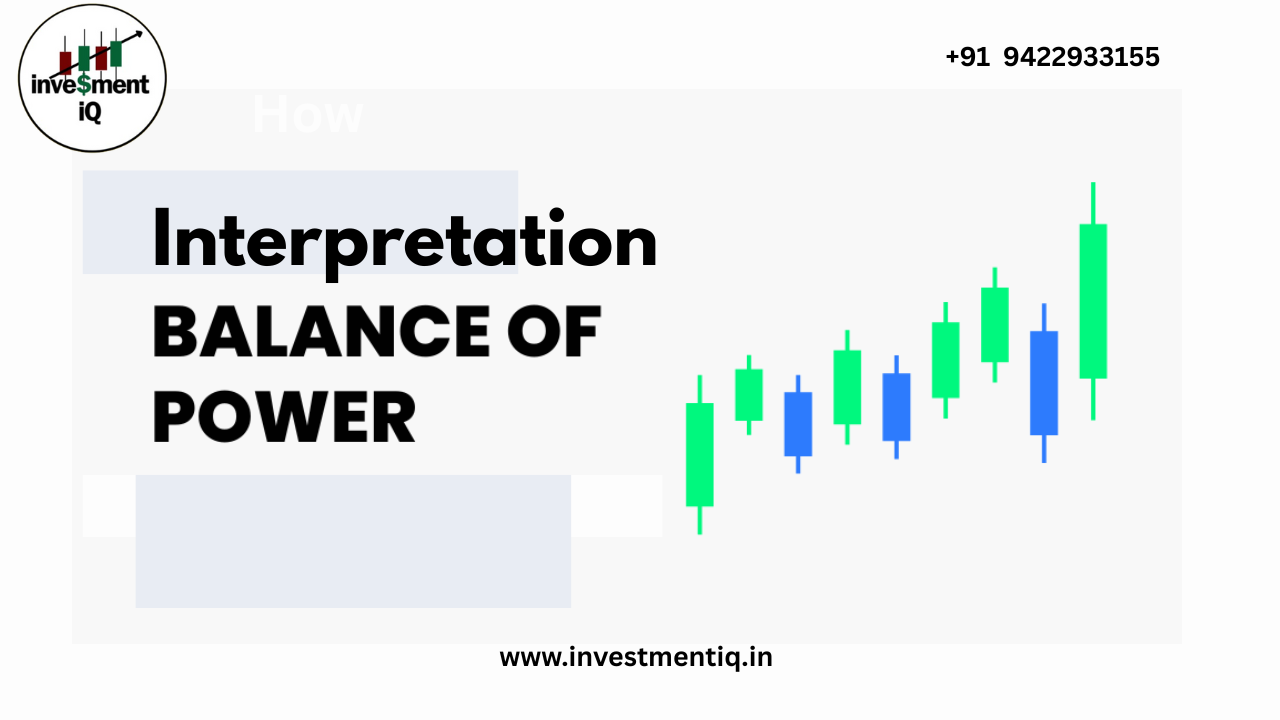
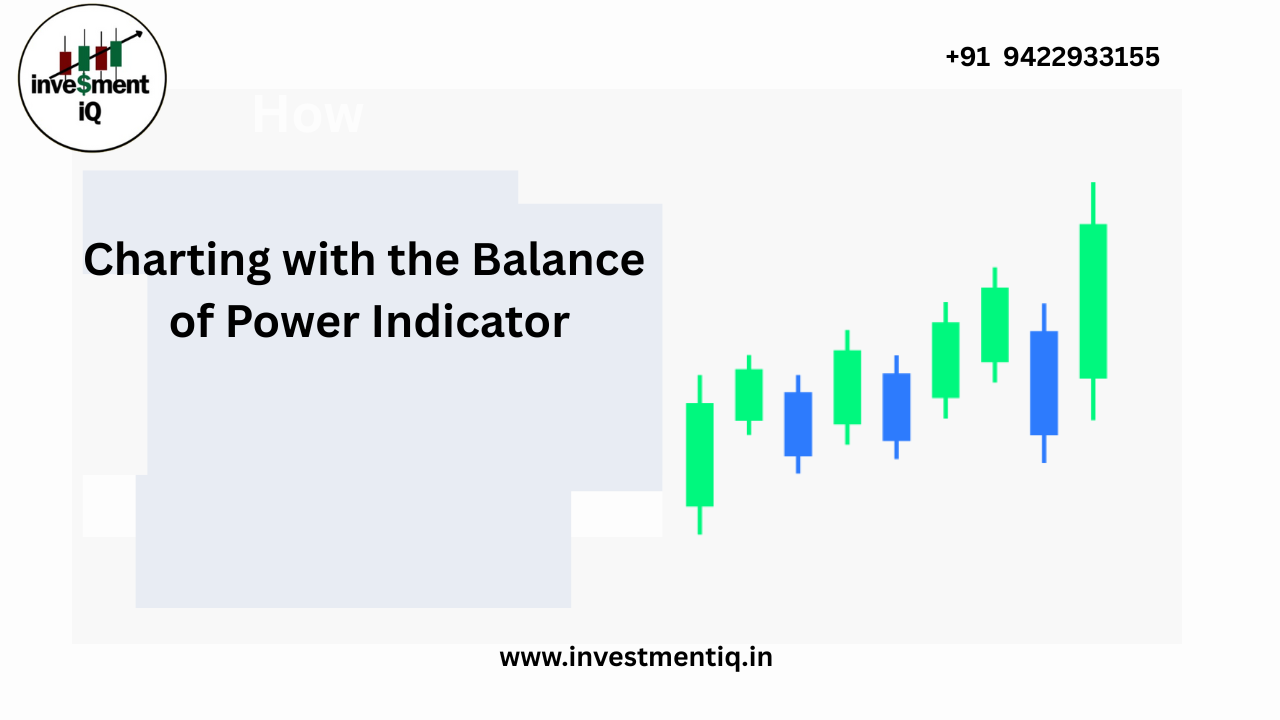
Read more about the article Interpretation of  Balance of Power (BOP)
"Interpret the Balance of Power (BOP) indicator to understand whether buyers or sellers are dominating the market – explained on InvestmentIQ.in"

Interpretation of Balance of Power (BOP)

Interpretation of Balance of Power (BOP) The direction and magnitude of price movement during the trading period are displayed by the Balance of Power indicator. The Balance of Power indicator, like the majority of oscillators, may be used to spot overbought/oversold situations, trends, and price divergences. Buying and selling indications are provided by zero-line crossovers. Zero-Line Crossovers This oscillator's scale has a midline of 0 and goes from -1 to +1. Zero-line crossovers are frequently utilized as buy or sell signals since they suggest a shift into either positive or negative territory. A buy signal is produced by a cross above the center line, while a sell signal is produced by a cross below. To minimize the number of whipsaws, a moving average is used to smooth the data. Although a SMA with greater periods decreases the quantity of false crossover signals, it also makes the indicator less sensitive. Although zero-line crosses offer the Balance of Power indicator's primary signal, it may also be used to identify overbought/oversold securities, ascertain the trend, and search for price divergences. Trend identification A rising BOP line indicates an upward trend and a falling…

Continue ReadingInterpretation of Balance of Power (BOP)
Read more about the article Volatility Indices
"Volatility Indices, such as the VIX, reflect expected market fluctuations and help traders manage risk."

Volatility Indices

Volatility Indices Indicators of implied volatility designed to measure fear and complacency for a range of indices and ETFs. What Are Volatility Indices? The volatility indices measure the implied volatility…

Continue ReadingVolatility Indices
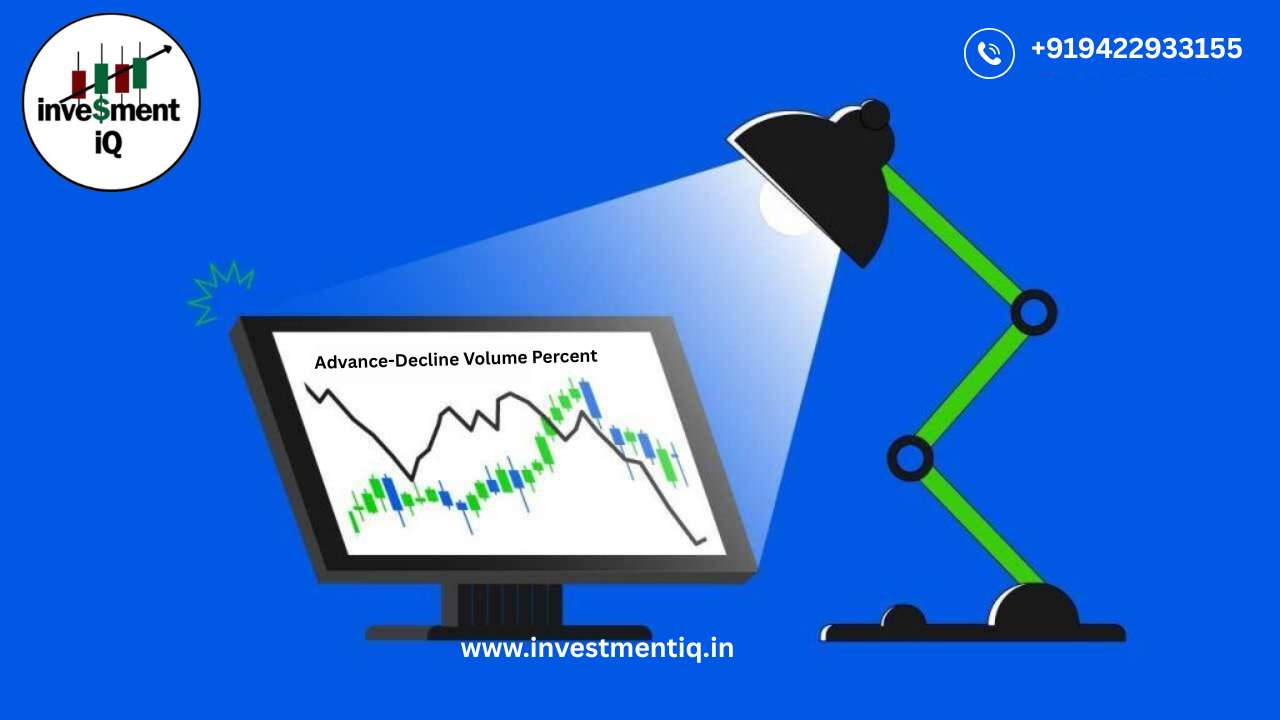
Read more about the article Advance-Decline Volume Percent
📊 Want to know if market volume is truly behind the move? The Advance-Decline Volume Percent tells you how much buying or selling power is driving the trend. ✔️ A must-use indicator for serious technical traders.

Advance-Decline Volume Percent

Advance-Decline Volume Percent A breadth indicator that measures the percentage of net advancing within a particular group, such as a SPDR or index ETF. you want to learn more about…

Continue ReadingAdvance-Decline Volume Percent
Read more about the article Record High Percent
"The Record High Percent measures the percentage of stocks reaching new highs, offering insight into market momentum."

Record High Percent

What Is the Record High Percent? A breadth measure based on new highs and lows is the Record High Percent.The quantity of equities setting new 52week highs is known as new  highs.The quantity of equities that set new 52week lows is known as new lows.The number of new highs divided by the number of new highs plus  new lows yields the indicator.New highs in relation to the total (new highs plus new lows) are displayed by this ratio.Record High Percent is a gauge of anindex's underlying strength or weakness, much like all other breadth indicators.For a number of important indexes, StockCharts.com computes  the  Record High Percent. Calculating the Record High Percent {New Highs / (New Highs + New Lows)} x 100 Spreadsheet 1 The number of new highs in relation to the total (new highs + new lows) is displayed by the Record High Percent, as the formula suggests. To generate round values that range from 0 to 100, the sum is multiplied by 100.…

Continue ReadingRecord High Percent
Read more about the article Trading Strategies & Models
"Trading Strategies & Models combine technical, fundamental, and algorithmic tools to create consistent and data-driven trade setups."

Trading Strategies & Models

Trading Models DecisionPoint Trend Model DecisionPoint's mechanical trend-based approach to trading. Trading StrategieWelcome to Part our Technical Analysis 101 Series – “Dominate the Markets with Smart Technical Analysis”!11 Bollinger Band…

Continue ReadingTrading Strategies & Models