Read more about the article Volatility Indices
"Volatility Indices, such as the VIX, reflect expected market fluctuations and help traders manage risk."

Volatility Indices

Volatility Indices Indicators of implied volatility designed to measure fear and complacency for a range of indices and ETFs. What Are Volatility Indices? The volatility indices measure the implied volatility…

Continue ReadingVolatility Indices
Read more about the article Advance-Decline Volume Percent
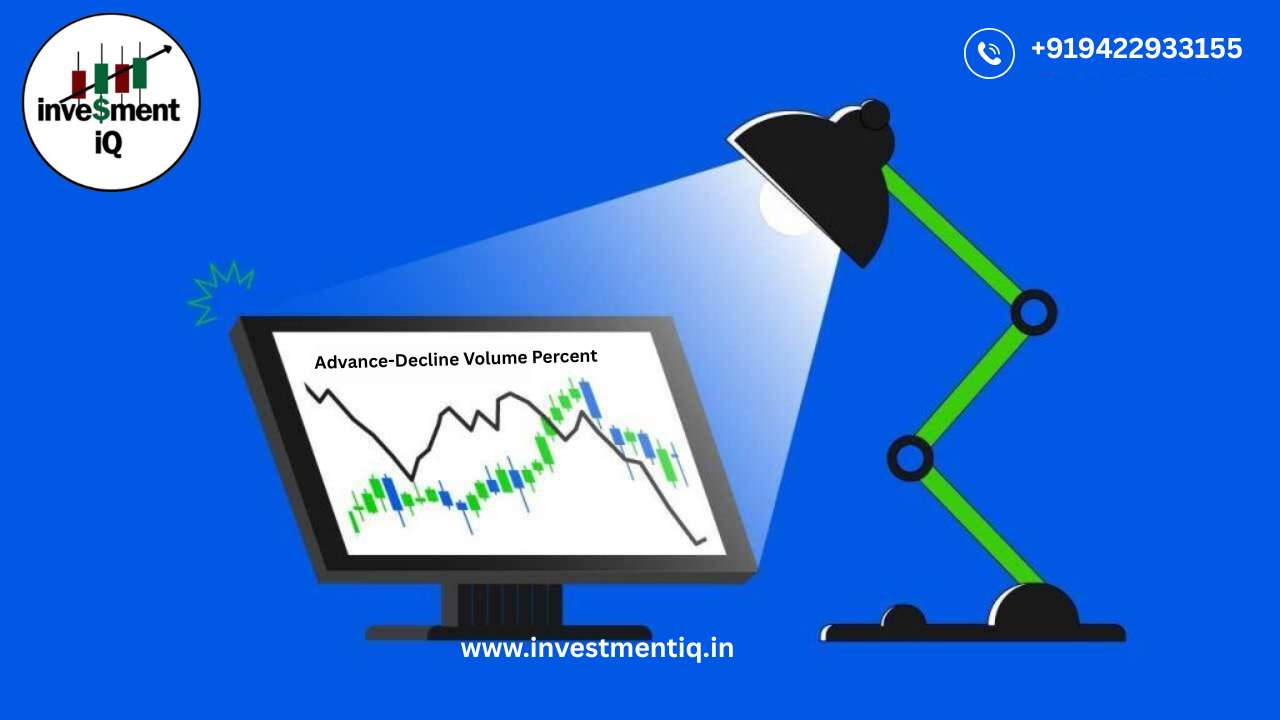
📊 Want to know if market volume is truly behind the move? The Advance-Decline Volume Percent tells you how much buying or selling power is driving the trend. ✔️ A must-use indicator for serious technical traders.

Advance-Decline Volume Percent

Advance-Decline Volume Percent A breadth indicator that measures the percentage of net advancing within a particular group, such as a SPDR or index ETF. you want to learn more about…

Continue ReadingAdvance-Decline Volume Percent
Read more about the article Record High Percent
"The Record High Percent measures the percentage of stocks reaching new highs, offering insight into market momentum."

Record High Percent

What Is the Record High Percent? A breadth measure based on new highs and lows is the Record High Percent.The quantity of equities setting new 52week highs is known as new  highs.The quantity of equities that set new 52week lows is known as new lows.The number of new highs divided by the number of new highs plus  new lows yields the indicator.New highs in relation to the total (new highs plus new lows) are displayed by this ratio.Record High Percent is a gauge of anindex's underlying strength or weakness, much like all other breadth indicators.For a number of important indexes, StockCharts.com computes  the  Record High Percent. Calculating the Record High Percent {New Highs / (New Highs + New Lows)} x 100 Spreadsheet 1 The number of new highs in relation to the total (new highs + new lows) is displayed by the Record High Percent, as the formula suggests. To generate round values that range from 0 to 100, the sum is multiplied by 100.…

Continue ReadingRecord High Percent
Read more about the article Trading Strategies & Models
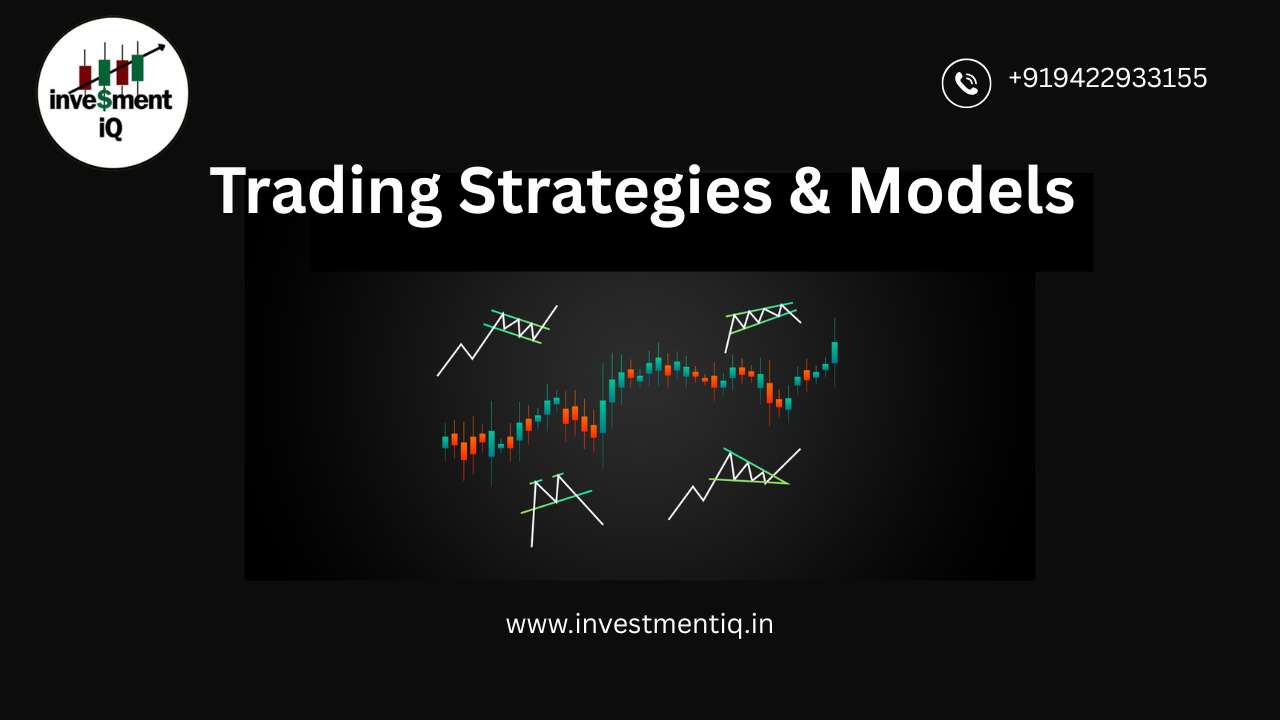
"Trading Strategies & Models combine technical, fundamental, and algorithmic tools to create consistent and data-driven trade setups."

Trading Strategies & Models

Trading Models DecisionPoint Trend Model DecisionPoint's mechanical trend-based approach to trading. Trading StrategieWelcome to Part our Technical Analysis 101 Series – “Dominate the Markets with Smart Technical Analysis”!11 Bollinger Band…

Continue ReadingTrading Strategies & Models
Read more about the article The Pre-Holiday Effect
Analyzing the Pre-Holiday Effect in stock market behavior and investment trends.

The Pre-Holiday Effect

The Pre-Holiday Effect There have been nine holidays in the last century when the Exchanges have customarily closed. Historical research shows that stock prices often behave in a specific manner in each of the two trading days preceding these holidays. By becoming aware of…

Continue ReadingThe Pre-Holiday Effect
Read more about the article Sector Rotation Analysis
"Sector Rotation Analysis helps investors shift capital into sectors likely to outperform in different phases of the economic cycle."

Sector Rotation Analysis

Sector Rotation Analysis Based on the relative performance of the eleven S&P Sector SPDR ETFs, Sector Rotation Analysis aims to connect the stock market's current strengths and weaknesses with the overall business cycle. Once the strong and weak sectors have been determined, you may compare the results to a theoretical business cycle chart to potentially identify the market's business cycle stage. You may then use that information to forecast which industries will have the most growth in the upcoming weeks and months. The Business Cycle Sector Rotation Analysis Stage 1 shows the economy contracting and bonds turning up as interest rates decline. Economic weakness favors loose…

Continue ReadingSector Rotation Analysis
Read more about the article Bottom Fisher
Discover how Pring's Bottom Fisher helps traders identify potential market bottoms and reversal opportunities.

Bottom Fisher

Bottom Fisher A market momentum indicator designed to help identify market bottoms. Introduction It should go without saying that a market's greatest potential emerges immediately following its lowest point. This happens when the momentum of all the constituents in a market average or any series with many components shifts from a downward trend below zero to a downward trend below zero. The change from the "winter" to the "spring" posture in Figure 1 symbolizes this. In this instance, momentum could be shown by a ROC or an RSI. However, a smooth momentum series, like a MACD or stochastics, is ideal since we are looking for a series that provides a somewhat intentional shift of direction. The Bottom Fisher actually makes use of the KST. Figure 1 The difference between the number of Dow stocks with short-term (daily) KSTs in the winter and spring positions, respectively, is used to compute the Bottom Fisher.The indicator decreases when more and more groups encounter winter as opposed to spring.The indicator bottoms and a purchase signal is produced when this divergence begins to reverse  upward. To ensure that fluctuations in the indicator match those of the Dow, S&P, or any other market average to which it is being compared, the real data is shown inversely. The indicator must drop to one of the oversold levels shown in Chart 1 and then reverse for a reversal to be considered. As demonstrated by the May 2012 signal in the chart below, these indications are typically dependable but far from flawless. Waiting for a positive MA crossing of the!PRBFISH is therefore a more cautious strategy. In this instance, a 10-day SMA is the MA in use. Nevertheless, reversals that form at or below the 11 oversold level are typically slow and intentional, with minimal false upside reversals. Chart…

Continue ReadingBottom Fisher
Read more about the article How to Pick a Timeframein-2026
⏱️ Struggling to choose the right trading timeframe? Whether you're a day trader, swing trader, or long-term investor — your success starts with the right chart! 📊

How to Pick a Timeframein-2026

How to Pick a Timeframe The timeframe for creating a chart depends on the compression of the data—intraday, daily, weekly, monthly, quarterly, or annual. The less compressed the data, the…

Continue ReadingHow to Pick a Timeframein-2026
Read more about the article Balance of Power (BOP)
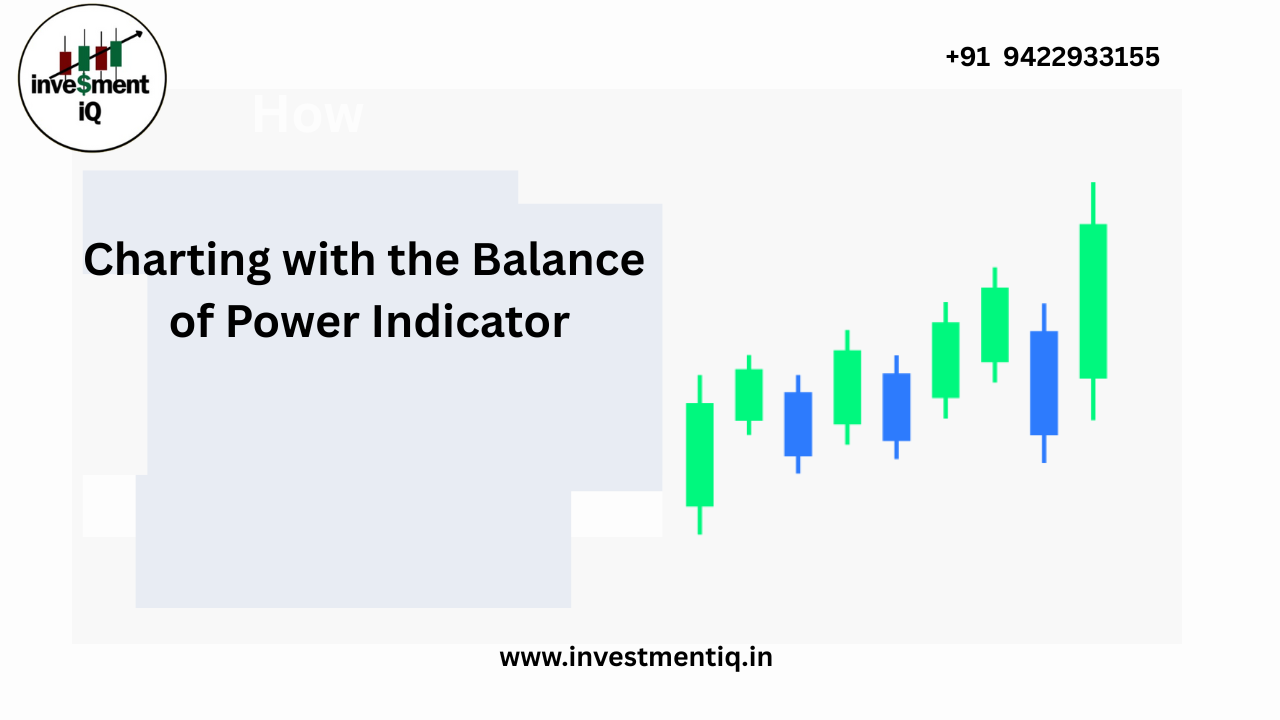
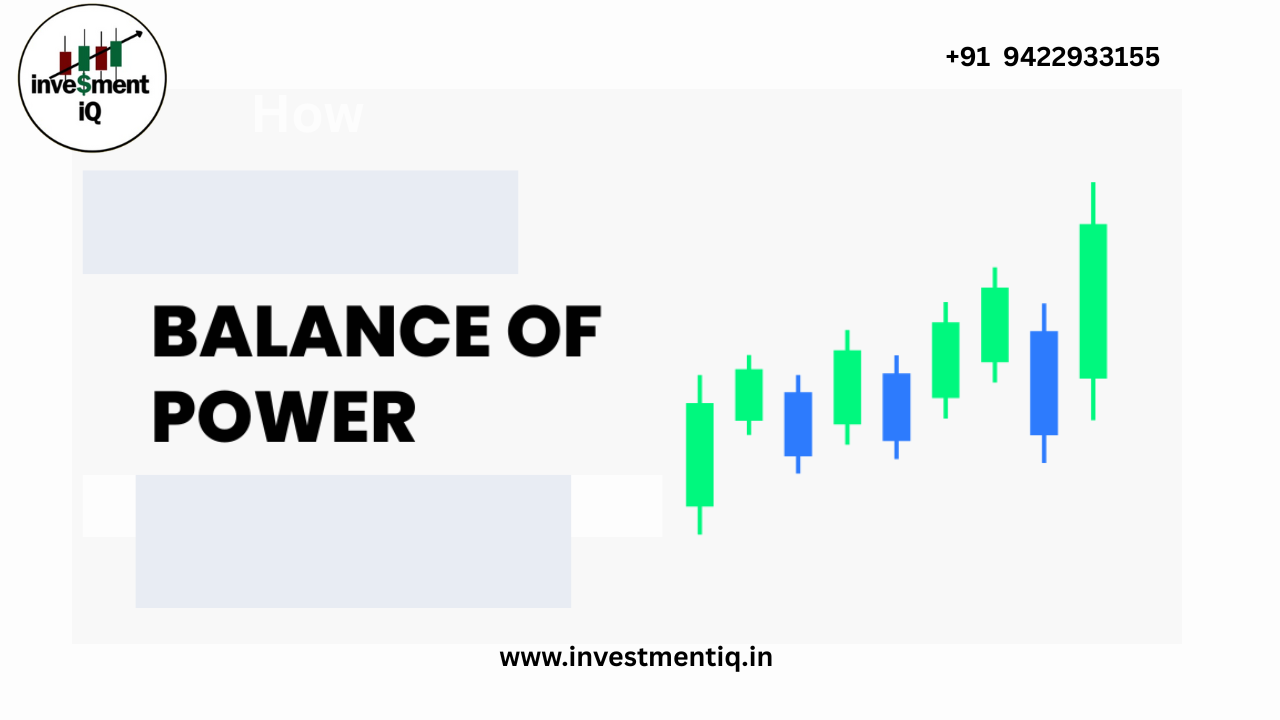
"Balance of Power (BOP) is a technical analysis tool used to assess the control of buyers vs sellers — learn more at InvestmentIQ.in"

Balance of Power (BOP)

What Is the Balance of Power? An oscillator called the Balance of Power (BOP) gauges how much pressure there is to purchase and sell. In the August 2001 issue of Technical Analysis of Stocks & Commodities magazine, Igor Levshin introduced this indicator, which contrasts the ability of sellers to drive prices to lower extremes with the ability of purchasers to drive prices to higher extremes. Bulls are in control when the indicator is in positive area, while sellers are in control when it is in negative territory. A value close to the zero line suggests equilibrium between the two and may signal a reversal of the trend. Note: This indicator is sometimes referred to as the Balance of Market Power (BMP). Calculation Livshin's original calculation method for…

Continue ReadingBalance of Power (BOP)